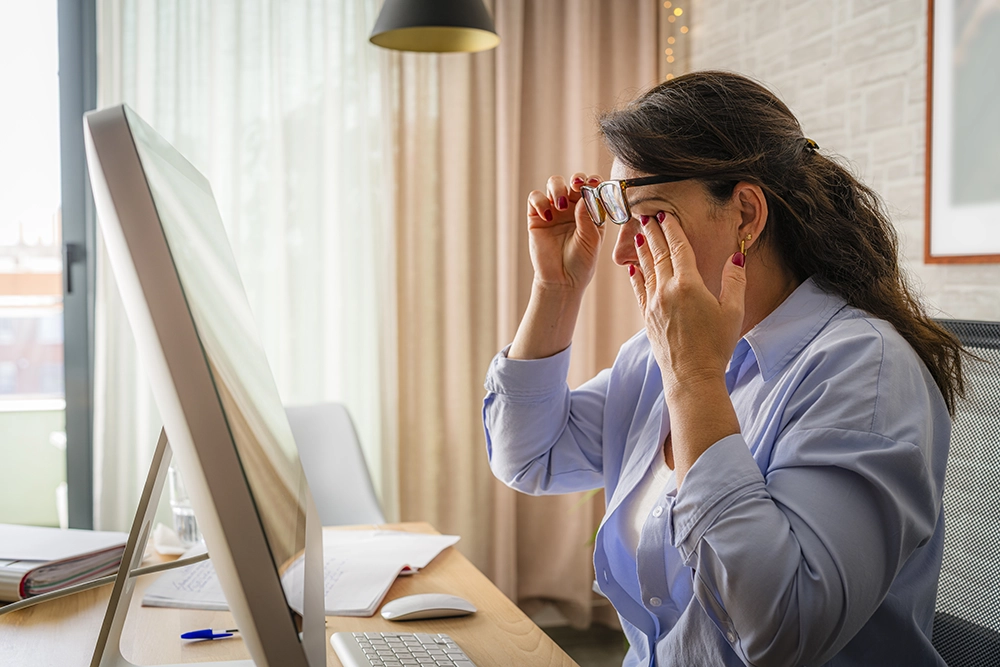
Why Screens Make Dry Eye Worse
If your eyes feel tired, gritty, or watery after a long day of computer use, you’re not alone. Prolonged screen time can significantly worsen symptoms of dry eye disease — especially evaporative dry eye and contact lens discomfort.
When we focus on digital devices, we blink up to 60% less often, allowing the tear film to dry out and evaporate.
Smart Habits for Healthier Eyes
- Follow the 20-20-20 Rule
Every 20 minutes, look at something 20 feet away for at least 20 seconds. It helps reset your blink rate and gives your eyes a brief rest. - Stay Conscious of Blinking
Try “full blinks” — gently closing your eyes completely for a moment — to refresh the tear film. - Adjust Your Environment
Avoid direct air vents or fans near your face, and keep indoor humidity at comfortable levels to prevent tear evaporation. - Position Your Screen Correctly
Keep your screen slightly below eye level. This helps reduce the surface area of your eyes exposed to air and prevents dryness. - Use Artificial Tears (and Know When to See a Specialist)
Over-the-counter drops can help temporarily, but if you rely on them daily, you may benefit from a professional dry eye evaluation to explore thermal or light therapy options.
Protecting Your Eyes Long-Term
Healthy screen habits, along with personalized dry eye care, can make a major difference in how your eyes feel — especially if you spend hours working or studying online.